Fast, interactive multi-dimensional image viewer for Python bioimaging
Napari is a community-driven, Python-based viewer designed for browsing, annotating, and analyzing large multi-dimensional microscopy datasets (2D, 3D, and timelapse).
High-performance rendering of multi-gigabyte 3D and 4D image stacks powered by VisPyRich layer system (Images, Points, Shapes, Labels, Tracks, Vectors, Surfaces)Thriving plugin ecosystem integrating Cellpose, StarDist, and deep learning toolsNative integration with NumPy, SciPy, and PyTorch tensors
Napari is a community-driven, Python-based viewer designed for browsing, annotating, and analyzing large multi-dimensional microscopy datasets (2D, 3D, and timelapse).
Information checked against an official source; not a hands-on test. Source · Last reviewed: 20/09/2026, 11:10:15
Key Features
High-performance rendering of multi-gigabyte 3D and 4D image stacks powered by VisPy
Rich layer system (Images, Points, Shapes, Labels, Tracks, Vectors, Surfaces)
Thriving plugin ecosystem integrating Cellpose, StarDist, and deep learning tools
Native integration with NumPy, SciPy, and PyTorch tensors
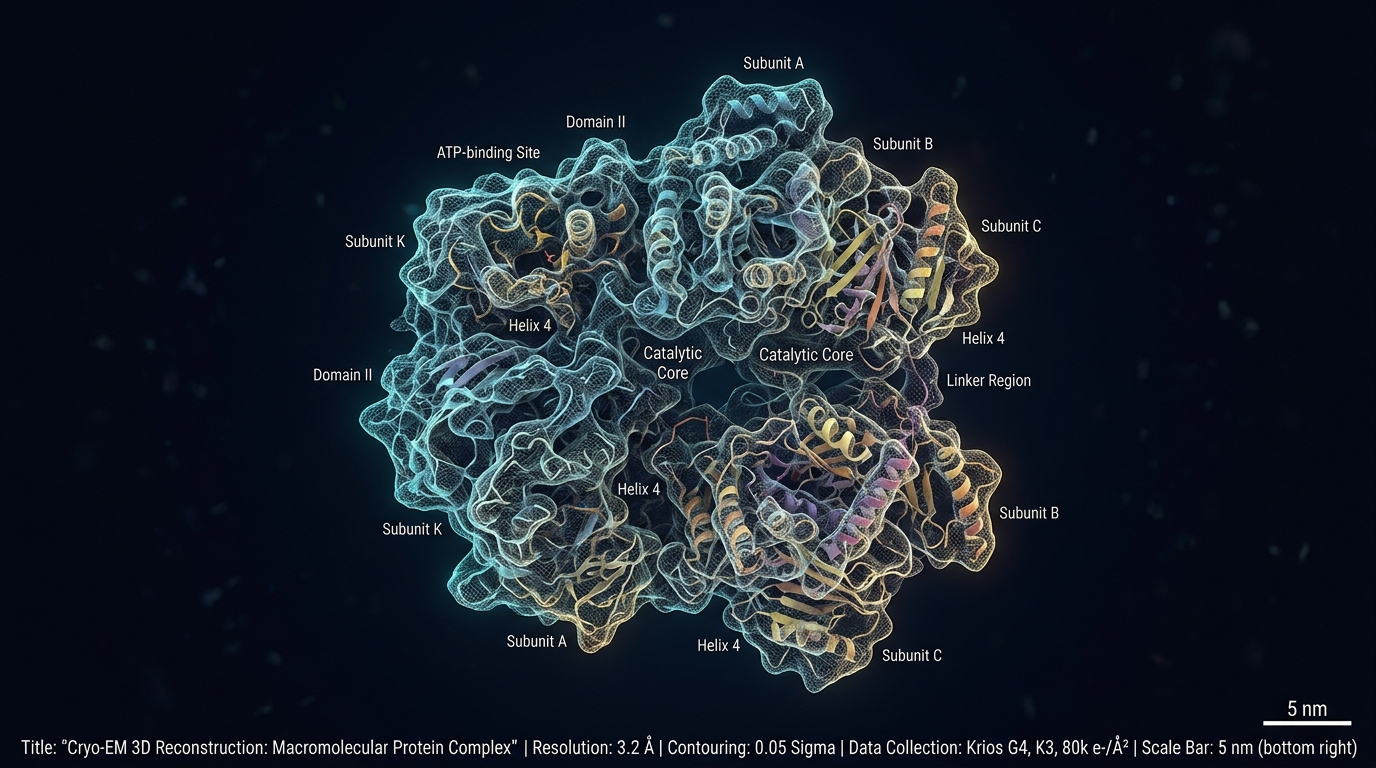
Interactive 3D Structure
Napari Predicted Complex
Streams real 3D atomic coordinates from RCSB Protein Data Bank
⇄ Drag to rotate · Scroll to zoom
pLDDT / B-Factor:
>90 Very high 70-90 Confident 50-70 Low <50 Very low
Academic Context & Research Evidence
Biological & Workflow Fit
Biological Application
Fluorescence microscopy, lightsheet imaging, electron microscopy, and spatial biology
Use this citation format when referencing Napari in scientific publications and benchmark papers.
@software{napari_2026,
  title = {{Napari}},
  author = {{Chan Zuckerberg Initiative (CZI) & Community}},
  year = {2026},
  url = {https://napari.org},
  note = {Indexed on aibioatlas - AI for Biology and Drug Discovery}
}
Peer-Reviewed Literature & Preprints
Live scientific citations streamed from Europe PMC and PubMed for Napari.
⏳ Fetching real-time literature from Europe PMC & PubMed...
Technical / Product Information
Missing values mean the catalog has no recorded information. They do not mean a feature is absent.
Entry typeOpen Source Software
Access modeOpen Source
AI roleMulti-Dimensional Image Visualization
Input dataNot recorded
Output dataNot recorded
Licence conditionsBSD-3-Clause
Commercial eligibilityPermissive open source release
Compute requirementsStandard workstation with OpenGL 3.3+ GPU support
ValidationNot recorded
TypeInteractive bioimage viewer and analysis ecosystem

 Research Imaging & Microscopy